
The Association of Battery Recyclers (ABR) is committed to advancing a cleaner, more sustainable future through the responsible recycling of lead batteries. With a 98% recycling rate, lead batteries are one of the most recycled consumer products in the U.S., conserving resources, reducing the need for newly mined materials and keeping valuable materials in circulation.
This proven circular economy also strengthens America’s domestic supply of critical minerals. By recovering and reusing lead and other valuable materials, U.S. battery recyclers support domestic manufacturing, energy infrastructure and a resilient U.S. supply chain.
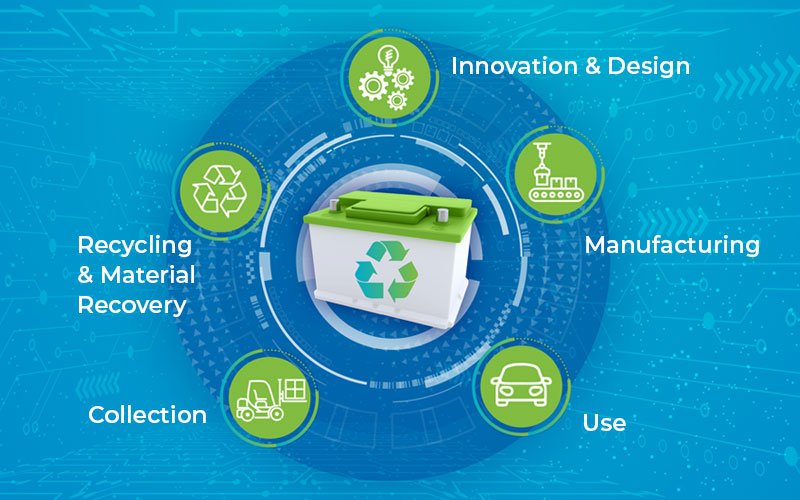
Lead batteries exemplify the principles of a circular economy, a system designed to minimize waste and maximize the reuse of materials. Nearly 100% of a lead battery can be recycled through sustainable recycling practices, with its materials repurposed to create new batteries. This closed-loop process not only conserves valuable resources but also reduces the need for raw material extraction, lowering the environmental footprint of battery production.
This closed-loop system also strengthens the domestic supply chain by keeping critical minerals and other valuable materials in circulation and available to U.S. manufacturers.
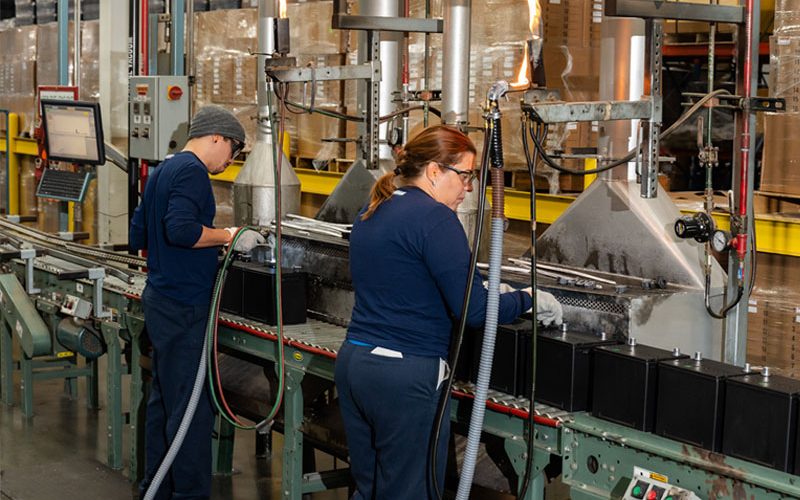

Millions of lead batteries reach the end of their service life each year, but their valuable materials don’t go to waste. With a nearly 100% recycling rate recycling rate in the U.S., lead batteries demonstrate the effectiveness of a well-established circular economy that recovers valuable materials for use again in new batteries.
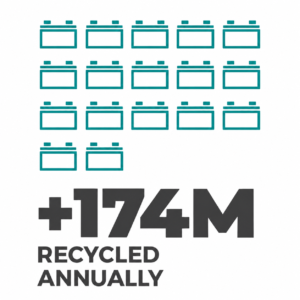
Lead batteries demonstrate what a successful circular economy can achieve. Each year, more than 174 million lead batteries are recycled in the U.S., recovering valuable materials that can be used again and again. This established recycling system reduces reliance on newly mined materials while providing a reliable domestic supply of critical mineral lead for U.S. manufacturing and essential applications.
